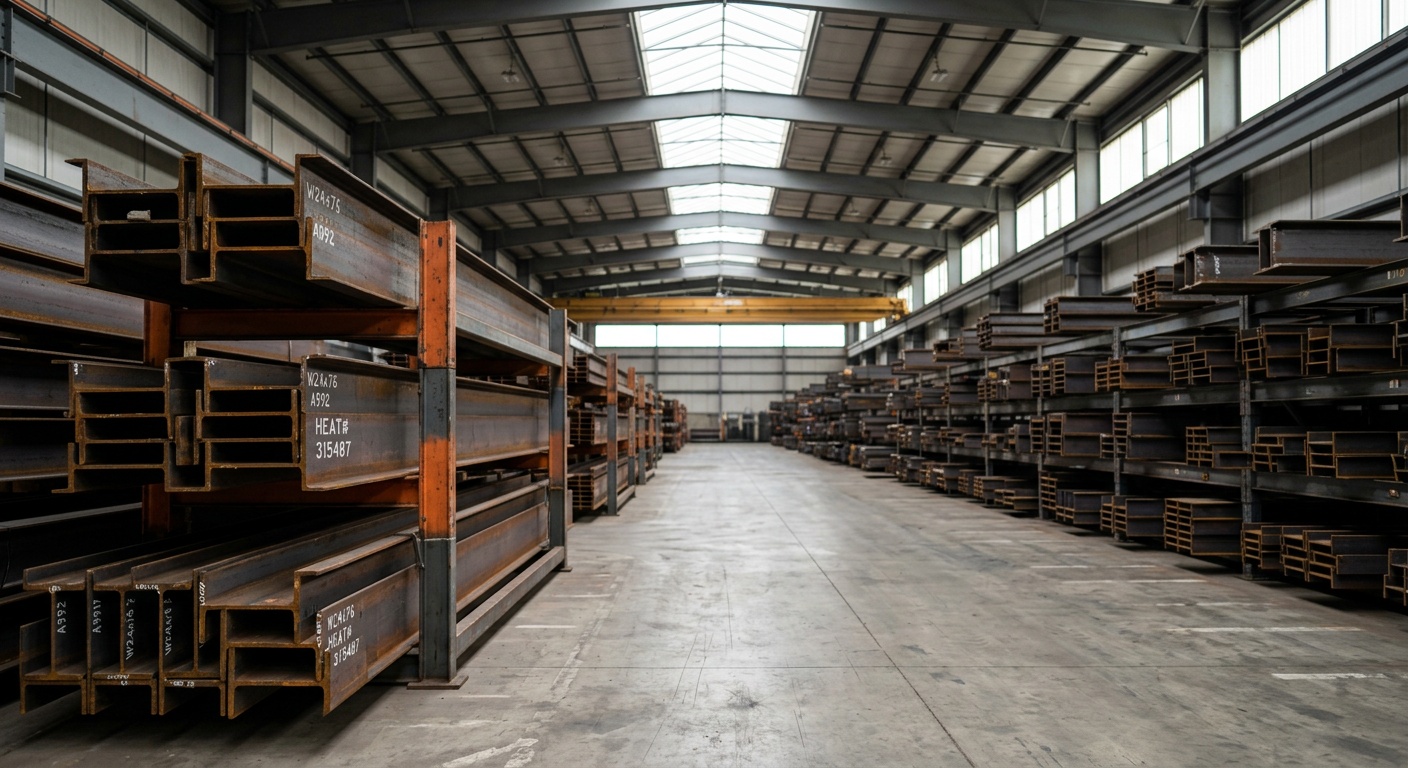
How to Choose the Right Structural Steel Supplier for Construction
Reading time: 9 minutes
Ever signed off on a steel order, only to watch your project timeline collapse because the supplier missed a delivery window by three weeks? If you’ve worked in construction long enough, you’ve probably lived a version of this nightmare. In 2026, with steel prices still swinging on tariff news and supply chains recovering unevenly from years of disruption, picking the wrong structural steel supplier isn’t just inconvenient—it’s a budget-killer and a schedule-wrecker.
This guide breaks down exactly what separates a reliable steel partner from a risky gamble, using real-world criteria that project managers, contractors, and procurement teams actually use in 2026.
Table of Contents
- Why Supplier Selection Matters More Than Ever in 2026
- Core Criteria for Evaluating Structural Steel Suppliers
- Certification and Compliance: The Non-Negotiables
- Comparing Supplier Types: A Side-by-Side Look
- Common Challenges and How to Solve Them
- Case Studies: Lessons from the Field
- Frequently Asked Questions
- Your Roadmap Forward
Why Supplier Selection Matters More Than Ever in 2026
Structural steel isn’t a commodity you buy once and forget—it’s the skeleton of every building, bridge, and industrial facility you’re responsible for. According to the American Institute of Steel Construction (AISC), steel framing errors and delivery delays remain among the top three causes of construction schedule overruns, alongside labor shortages and permitting bottlenecks.
In 2026, the stakes are higher because global steel production has become more volatile. Domestic mills are running at roughly 74% capacity utilization according to recent American Iron and Steel Institute figures, and lead times for fabricated structural members have stretched to 8-14 weeks in many regions, up from pre-pandemic norms of 4-6 weeks. That means a supplier’s reliability today has a direct, measurable impact on your bottom line.
Well, here’s the straight talk: choosing a supplier isn’t about finding the cheapest quote. It’s about finding the partner who won’t leave you exposed when things go sideways—and in construction, something always goes sideways.
Core Criteria for Evaluating Structural Steel Suppliers
Before you sign a purchase order, run every candidate supplier through this checklist. Think of it as due diligence, not paperwork.
1. Financial Stability and Production Capacity
A supplier with shaky finances is a liability disguised as a bargain. Ask for evidence of consistent order fulfillment over the past 24 months. Request references from at least two projects similar in scale to yours. If a supplier hesitates to share this, treat it as a red flag.
- Check whether they own mills, warehouses, or fabrication shops—or rely entirely on third-party sourcing.
- Ask about their current backlog. A supplier drowning in unfilled orders may not prioritize your project.
- Look for suppliers who diversify their raw material sourcing, reducing exposure to single-region tariff shocks.
2. Quality Control and Material Traceability
Structural steel failures rarely make headlines until something collapses. That’s why traceability matters. Every beam, plate, and connector should be traceable back to its mill certificate (often called a “mill test report” or MTR), confirming chemical composition and mechanical properties.
Ask suppliers directly: “Can you provide MTRs for every shipment, and how quickly?” A supplier who can’t answer confidently in under a day probably doesn’t have robust internal tracking systems.
3. Logistics and Delivery Reliability
Steel is heavy, bulky, and expensive to reroute. A supplier’s logistics network—including their relationships with freight carriers and their proximity to your job site—directly affects both cost and schedule risk.
Pro Tip: Ask for their on-time delivery rate over the last four quarters, not just a general claim of “reliability.” Top-tier suppliers track and share this metric because they’re proud of it.
Certification and Compliance: The Non-Negotiables
In the U.S., structural steel suppliers should carry certifications that verify both fabrication quality and safety compliance. These aren’t optional extras—they’re your legal and structural safety net.
- AISC Certification – Confirms the fabricator meets quality standards for structural steel fabrication and erection.
- ISO 9001 – Demonstrates a documented quality management system.
- AWS D1.1 Welding Certification – Ensures welders and welding procedures meet structural code requirements.
- OSHA Compliance Record – A supplier’s safety history often predicts how seriously they take process discipline overall.
According to a 2025 industry survey by the Fabricators & Manufacturers Association, projects using AISC-certified fabricators reported 22% fewer field rework incidents compared to those using uncertified shops. That’s not a marginal difference—that’s weeks of schedule protection.
Comparing Supplier Types: A Side-by-Side Look
Not all suppliers operate the same way. Here’s how the three most common types stack up across factors that matter most to contractors in 2026.
| Supplier Type | Avg. Lead Time | Price Flexibility | Custom Fabrication | Best For |
|---|---|---|---|---|
| Mill-Direct Supplier | 10-16 weeks | Low | Limited | Large-volume, long-lead projects |
| Regional Fabricator | 6-10 weeks | Moderate | High | Mid-size commercial builds |
| Steel Service Center | 2-5 weeks | High | Moderate | Fast-track or repair projects |
| Import Broker | 12-20 weeks | Variable | Low | Cost-sensitive, flexible-timeline jobs |
Visualizing Supplier Priorities: What Contractors Value Most
When surveyed in early 2026, general contractors ranked the following factors as most influential in their supplier selection decisions:
Common Challenges and How to Solve Them
Challenge 1: Price Volatility Mid-Project
Steel prices in 2026 have remained sensitive to tariff adjustments and energy costs tied to mill operations. If your contract doesn’t lock pricing or include a clear escalation clause, you could face budget overruns mid-build.
Solution: Negotiate a price-lock agreement for orders placed within a defined window, or request a cap on escalation percentages tied to published index benchmarks like the CRU Steel Price Index.
Challenge 2: Inconsistent Communication During Delays
Delays happen—that’s not the real problem. The real problem is suppliers who go silent when things slip. Quick Scenario: Imagine your steel shipment is stuck at a port due to customs processing. A supplier who proactively emails you with updated timelines is worth far more than one who waits for you to call in a panic.
Solution: Build communication expectations into your contract—weekly status updates, a named point of contact, and escalation procedures for delays exceeding 5 business days.
Challenge 3: Inadequate Fabrication Precision
Poorly fabricated connections or misaligned bolt holes cause field rework that eats into labor budgets fast. Ask suppliers for their tolerance standards and whether they use 3D modeling (BIM) integration to verify fit before shipment.
Case Studies: Lessons from the Field
Case 1 – Mid-Rise Office Complex, Texas (2025-2026): A general contractor switched from an import broker to a regional fabricator after repeated customs delays pushed their timeline back nine weeks. The regional fabricator’s 7-week average lead time and BIM-integrated shop drawings eliminated field rework almost entirely, saving an estimated $180,000 in labor costs.
Case 2 – Industrial Warehouse Expansion, Ohio: A logistics company chose the lowest-bid mill-direct supplier without checking backlog capacity. The supplier’s existing orders pushed the contractor’s delivery back by four months, triggering penalty clauses in the lease agreement. The lesson: cheapest isn’t always cheapest once delay costs are factored in.
As one veteran structural engineer put it during a 2026 industry panel: “The supplier you choose is really a risk-management decision disguised as a purchasing decision.”
Frequently Asked Questions
How far in advance should I lock in a structural steel supplier?
Given current lead times averaging 8-14 weeks for fabricated members, most experienced project managers recommend finalizing your supplier at least 4-6 months before steel is needed on-site, especially for projects requiring custom fabrication.
What’s the biggest red flag when evaluating a new supplier?
Reluctance to share references, mill certificates, or on-time delivery data. Transparent suppliers are proud of their track record and will provide documentation quickly. Hesitation usually signals inconsistent performance history.
Should I always choose the supplier with the lowest quote?
Not necessarily. Factor in delivery reliability, certification status, and communication quality alongside price. A slightly higher quote from a dependable supplier often costs less overall once delay penalties and rework are considered.
Your Roadmap Forward
Choosing a structural steel supplier in 2026 isn’t about chasing the lowest number on a quote sheet—it’s about protecting your project from the ripple effects of one weak link in your supply chain. Here’s your practical action plan:
- Audit certifications first. Confirm AISC, ISO 9001, and AWS D1.1 status before requesting quotes.
- Request performance data. On-time delivery percentages and backlog transparency tell you more than a glossy brochure ever will.
- Build communication clauses into contracts. Don’t leave update frequency to chance.
- Diversify where possible. Consider maintaining relationships with both a primary and backup supplier to buffer against regional disruptions.
- Reassess annually. Market conditions shift fast—your 2025 supplier relationship may not be your best option in 2027.
As steel markets continue adjusting to tariff policy and global demand shifts, the contractors who thrive will be the ones treating supplier selection as an ongoing strategic relationship rather than a one-time transaction. So, the next time you’re comparing quotes, ask yourself: are you choosing a vendor, or building a partnership that can weather the next disruption? That distinction might be the most valuable line item on your entire project budget.